It’s been good to stay in the one place for three nights at the Hotel Nagasaki, after we sorted out a small problem with our booking. I had booked and paid for the room through bookings.com but hadn’t included Anthony’s name in the booking. The hotel couldn’t include him until this was changed through bookings.com. We had a few fraught minutes as I logged in on my phone but it ended up being sorted by agreeing to pay an additional charge for Anthony. (We’ll have to remember to check this in the future as you pay for each person in Japan, regardless of the room you book and it is nice to have Anthony around!)
This is our second and last stop in Kyushu and we have certainly found it greener than Honshu – the trees are all in leaf and the fields we saw on the train were green with spring crops. There are also more cars on the road.
Nagasaki is a port city built around a beautiful natural harbour and surrounded on three sides by verdant mountains. It’s easy to get around with a day streetcar (tram) pass which is cheap at 500 yen per person per day and it allows you to go from one end of Nagasaki to the other. We can walk to Nagasaki train station but it was also two stops on the streetcar which helped on the day of heavy rain!


There are a number of vantage points where you can see the whole of Nagasaki spread before you. Our room at the hotel on the 11th floor had a good view but you could see down to the water from the 15th floor restaurant where we had breakfast.

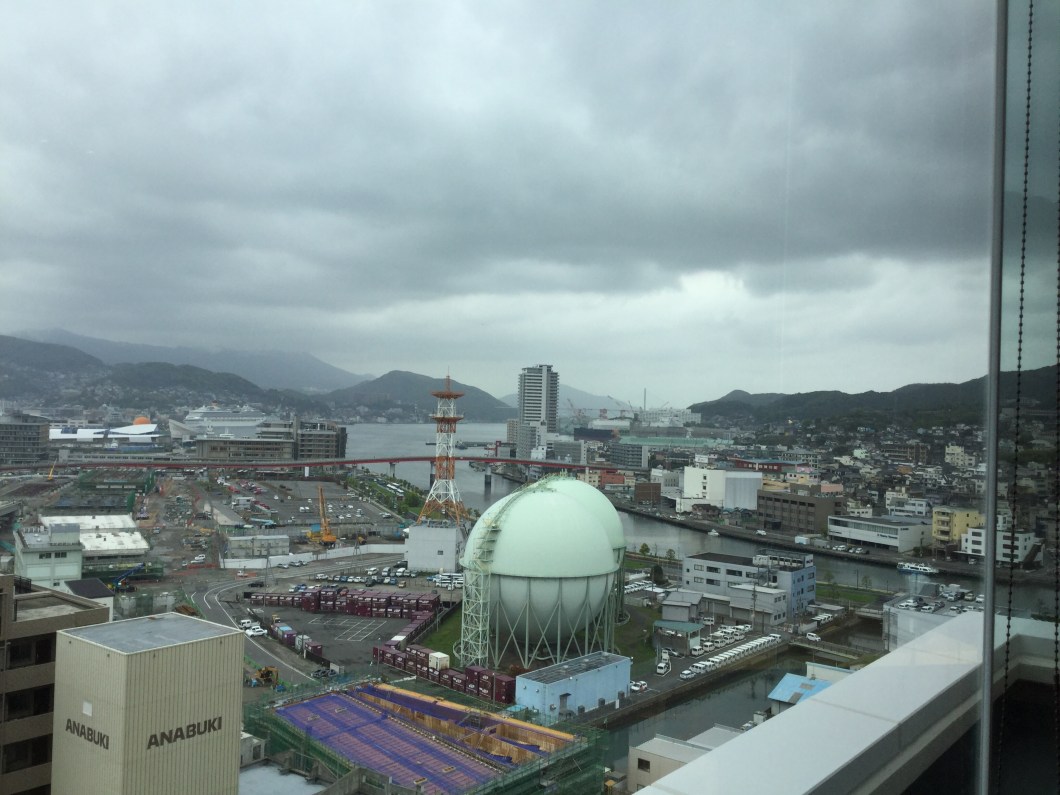
The view from the Glover Gardens was better still. This is an enclave of the oldest European buildings including that of Thomas Glover, one of the first white Europeans credited with bringing the industrial revolution to Japan. The buildings and beautiful gardens are perched above the working harbour.


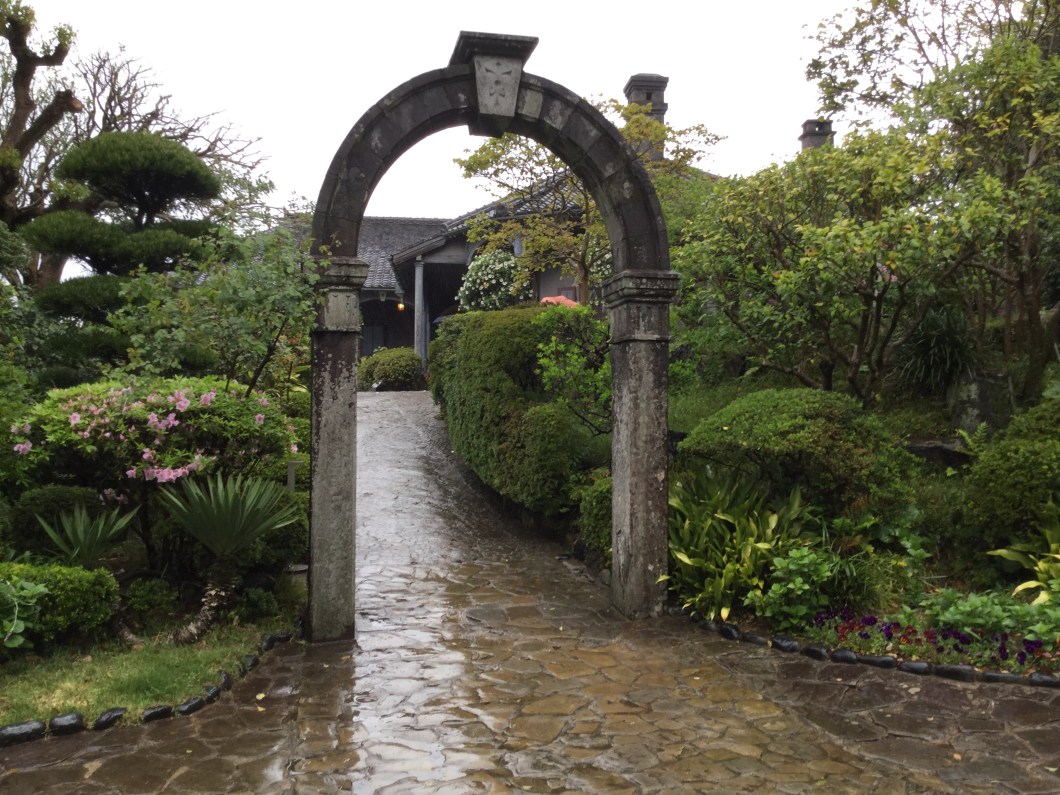
kIt had started to rain so we had to stop for castella cake and Dutch coffee in one of the buildings which had been converted into a cafe.
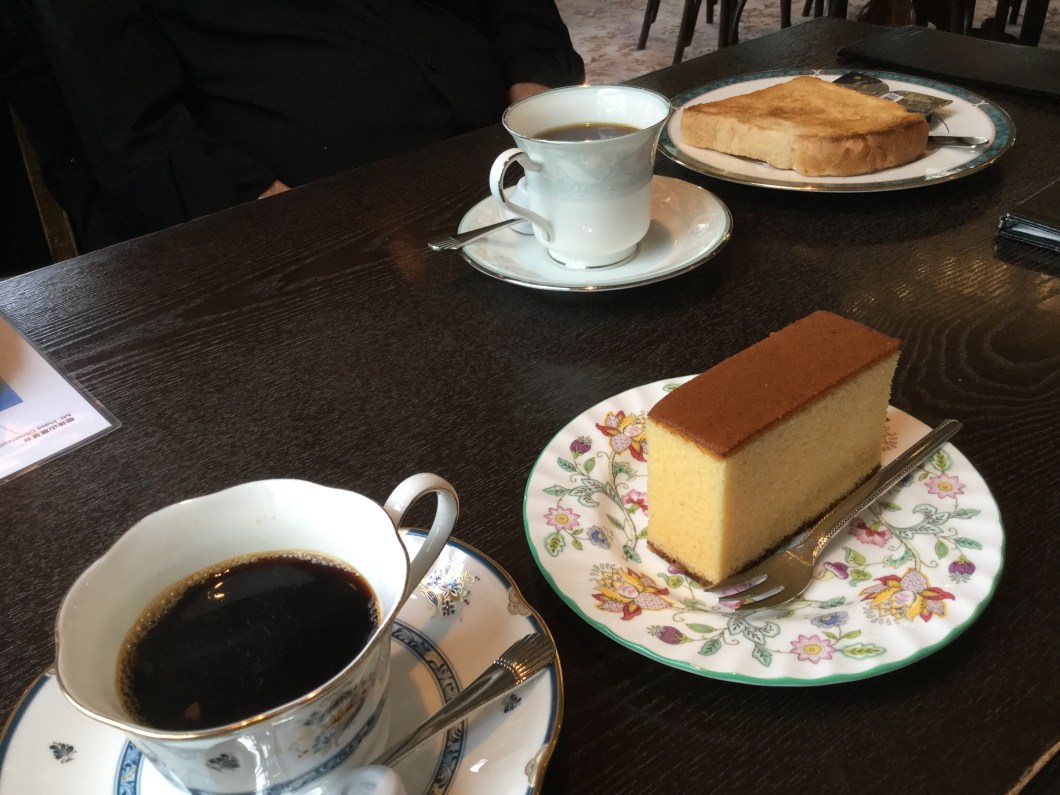
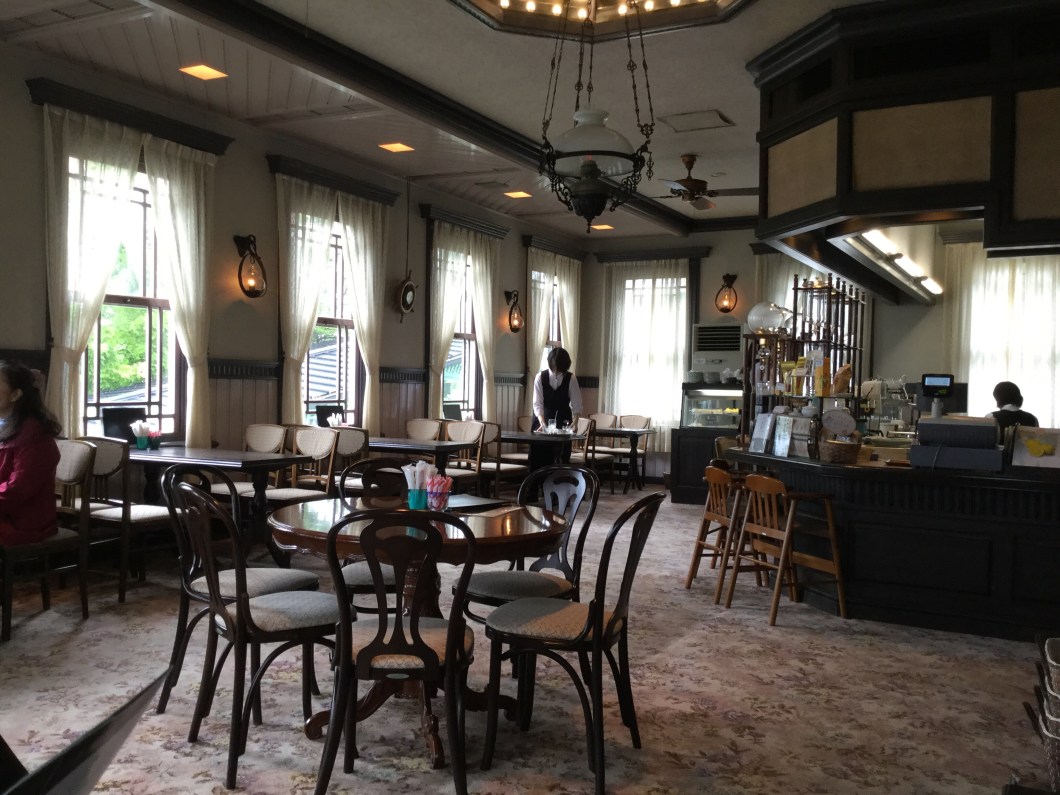 Both products are quite symbolic of Nagasaki. Castella cake features in lots of tourist merchandise, souvenirs and products. The Dutch coffee represents the Dutch immigrants in Nagasaki who worked for the Dutch East India Company but were isolated in Dejima on a kind of island. There’s also a street called the Dutch Slope which has European style houses but it was just too wet and blustery for us to keep going along it.
We also visited the Oura Catholic Church which is the oldest Catholic Church in Japan built by French missionary priests in 1865. There is also an adjacent museum building which once housed the seminary in which Maximilian Kolbe taught in the 1930s. It’s a beautiful church but unfortunately no pictures were allowed inside.


The rain came down even heavier and we were soaked despite our rain coats and umbrella. We retreated to one of the Chinese restaurants in China town and had a late lunch of special fried rice and sweet and sour pork but the rain was relentless. Our shoes and the bottom half of us was soaked, and the rain had seeped into the back of Anthony’s backpack. Sightseeing is no fun in the rain so we ended up adjourning back to our hotel for a hot bath, free beer from our bar fridge and snacks purchased from the Family Mart located at the bottom of the hotel.
There were lots of other highlights of our few days in Nagasaki.
At Nagasaki Peace Park you can see that ‘ground zero’ was actually below was the current ground level. 
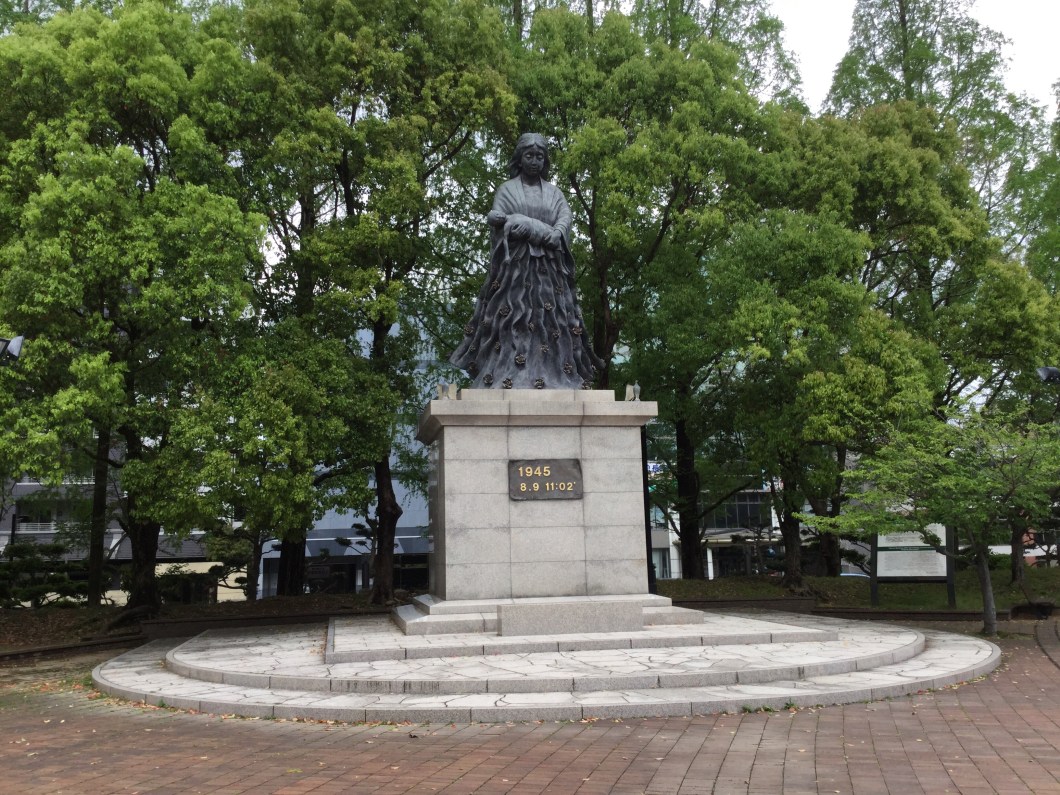
There was also a very moving statue of a mother with her baby and many anti nuclear war exhortations from countries and people from around the world.

The Nagasaki Peace Statue erected by the citizens of Nagasaki on the 10th anniversary of the atomic bombing is also symbolic. “The elevated right hand points to the threat of nuclear weapons, while the outstretched left hand symbolises tranquility and peace. Divine omnipotence and love are embodied in the sturdy physique and gentle countenance of the statue, and a prayer for the repose of the souls of all war victims is expressed in the closed eyes. Furthermore, the folded right leg symbolises quiet meditation, while the left leg is poised for action in assisting humanity.”
He looks pretty buff and is a lovely shade of blue!
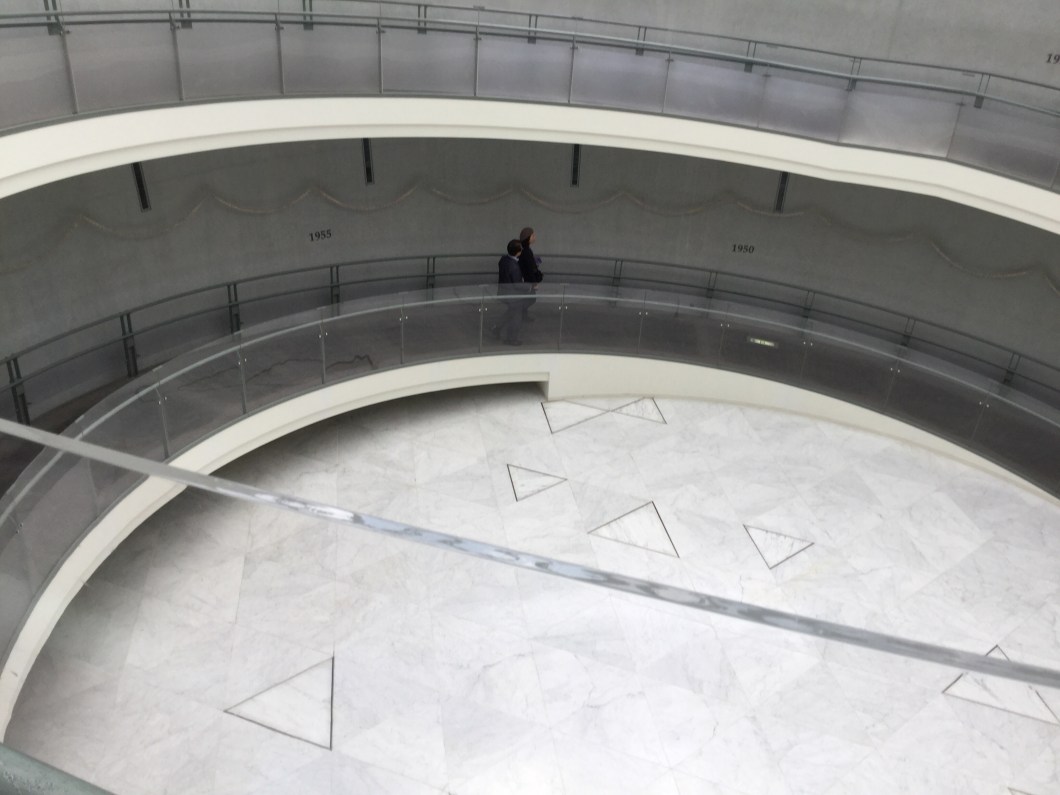
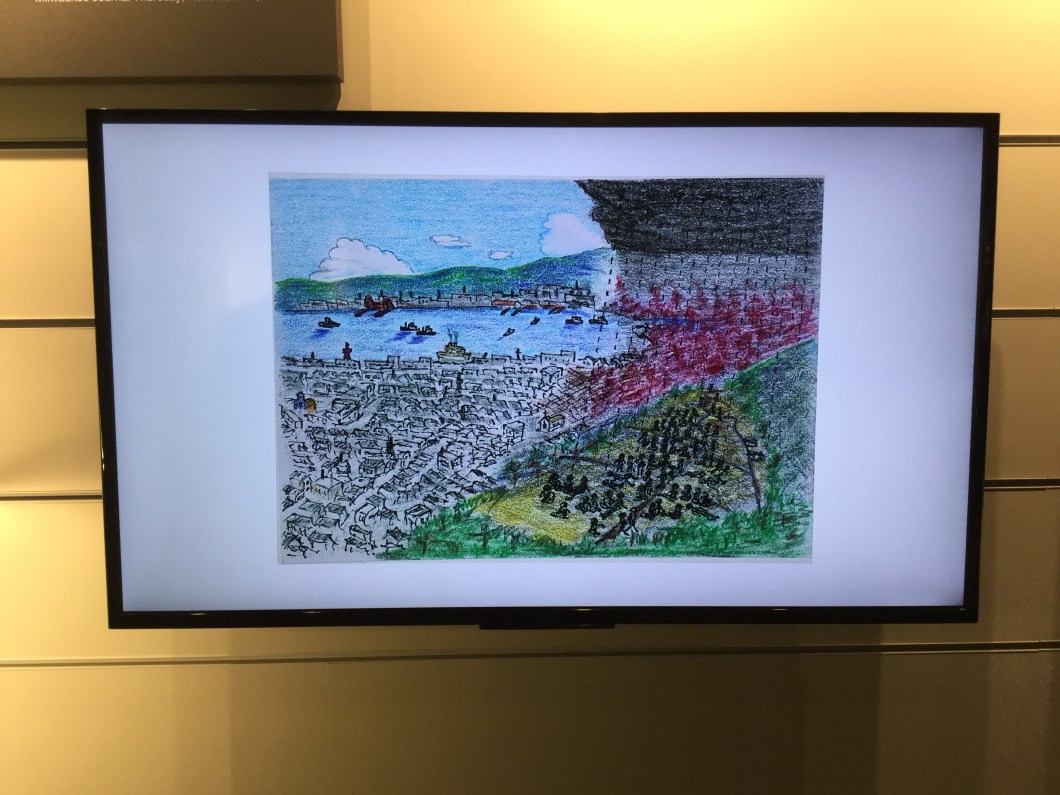
 The Nagasaki atomic bomb museum was worth seeing and provides a powerful statement anti-nuclear statement.



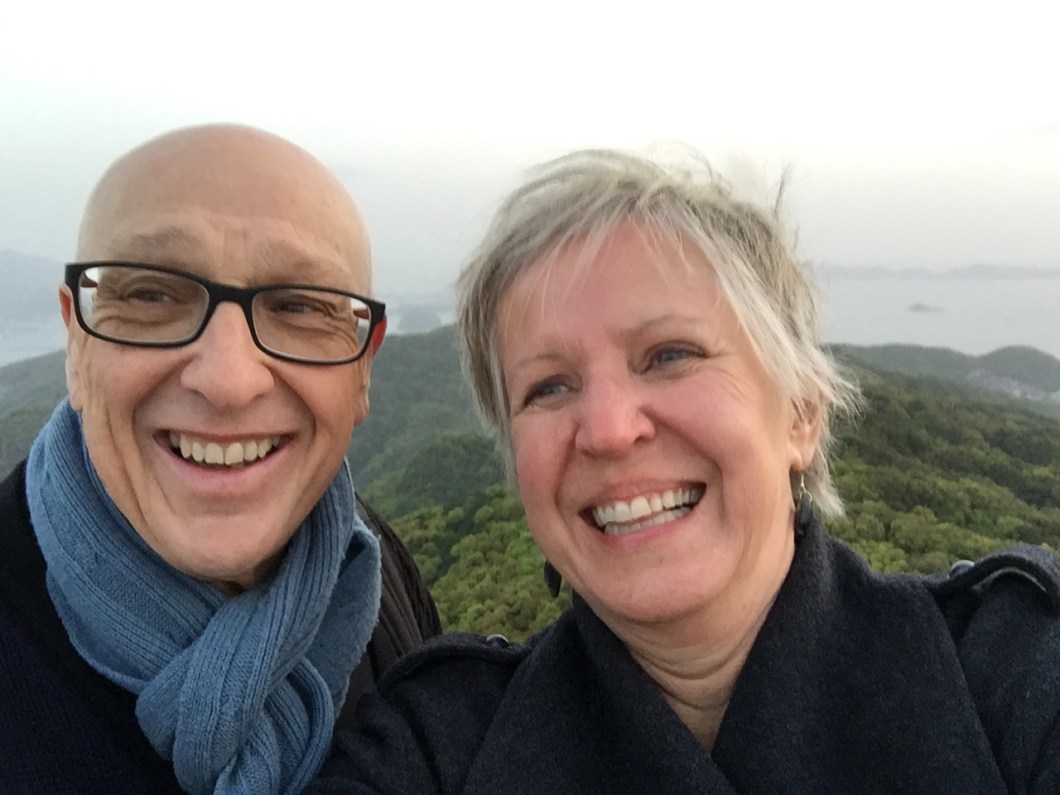
 On a lighter note, the Nagasaki Ropeway was a great way to see the geography of the city from the highest point. My favourite photo is looking towards the islands in the Sea of Japan as the sun was setting.


 Travelling with Teresa
What a fascinating place Teresa. Glad your room mate was able to stay;) I was really a little surprised at the extent of the European influences in this city. No doubt you were glad to even find some coffee and cake too.
LikeLiked by 1 person
the thousand paper cranes from a 150m length of paper – just extraordinary!!!
It seems as though the whole northern hemisphere is quite damp – my sister had to cancel their pilgrimage mid-way through – they were frozen, soaked and became unwell for much of it!
I hope it improves for you both.
LikeLiked by 1 person
It was all fantastic but all too quickly over!
LikeLike